
Remote Control
Remotely controlled balloons are a great way to get involved in ballooning! They work much like full sized balloons, but can be operated without an FAA license, and in much smaller areas such as parks and back yards. ABC has members who fly (and build, in fact!) remote controlled balloons.



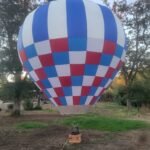
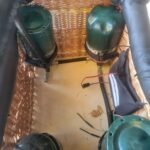

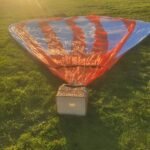
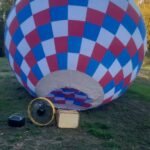
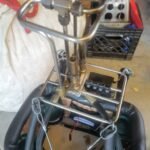

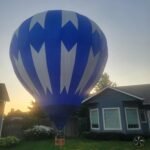


A remote-controlled (RC) hot air balloon is a small, unmanned balloon that looks and works similarly to a real hot air balloon but is controlled from the ground using a remote system instead of a pilot on board. They can’t carry real passengers. They are primarily flown on a tether here in the United States.
It has a miniature burner, sometimes resembling the look of a real burner, that heats the air inside the envelope. It uses propane, just like a real hot air balloon burner. Just like a real hot air balloon, the heated air causes the RC balloon to rise.
A remote control sends signals to a device in the balloon (called a servo) that moves to activate the propane valve for the burner. The more the burner is activated, the hotter the air inside the balloon gets, causing it to rise. When the balloon cools down, it comes back down to the ground.
An RC balloon operator can control the up and down movement with fine precision, while the breeze and other conditions control the horizontal movement.
Hobby flying and Aerial photography or video (lightweight cameras), advertising or promotional displays. They are also often used for training or demonstrations to show how balloons operate.
They are real hot air balloons in miniature form, not toys. They use real flame and fuel.
With a radio transmitter that turns the burner on and off through a heavy-duty servo.
No. Like full-size balloons, they drift with the wind. You can only control the up and down movement.
They can fly to several hundred feet if they remain in range of the radio system. Typically, RC balloons are flown at tree top level and lower. In the US they are tethered, however it is possible to allow them to free-fly if the conditions allow it.
Propane is the preferred fuel choice.
Yes, batteries power the radio receiver and transmitter.
Most flights last between 30 minutes and 45 minutes. However, depending how much fuel is on board and what the ambient temperature is outside, they can fly for longer or shorter.
Hobby flying, advertising, aerial photography or video, education and demonstrations, festivals and special events.
Calm winds under 5 mph. However, dry conditions and cooler air temperatures are preferred for longer flight time.
No. Wind and moisture can make flying unsafe. You also don’t want to get the fabric wet. Water can damage the system.
Currently there are no regulations that govern model balloons, or remote-controlled hot air balloons. It is recommended that you become familiar with low level airspace requirements that drones follow in FAA Part 107.
Yes, if appropriate safety precautions are taken.
Depending on size and style, a typical RC balloon can cost between $3,000 and $5,000.
Yes! However, they do require training and safety awareness. We can help with both!
Yes. Regular inspection of fabric, burner, fuel system, and electronics is required.